From:Taian Haishu Machinery Co.,Ltd. Updatetime:2026/11/2 16:17:35 Views:
Do not simply "turn on the power and start cutting" when starting a new CNC lathe. The correct sequence is: first inspect the appearance and documents, then confirm installation level, power supply
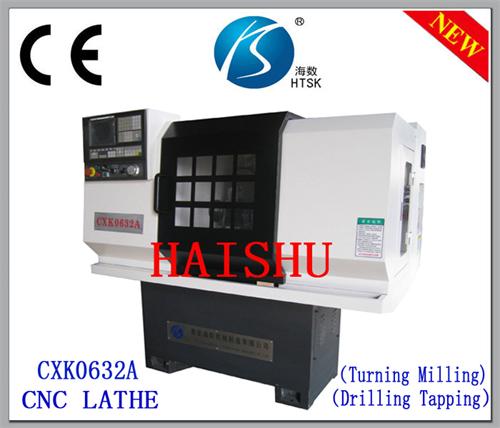
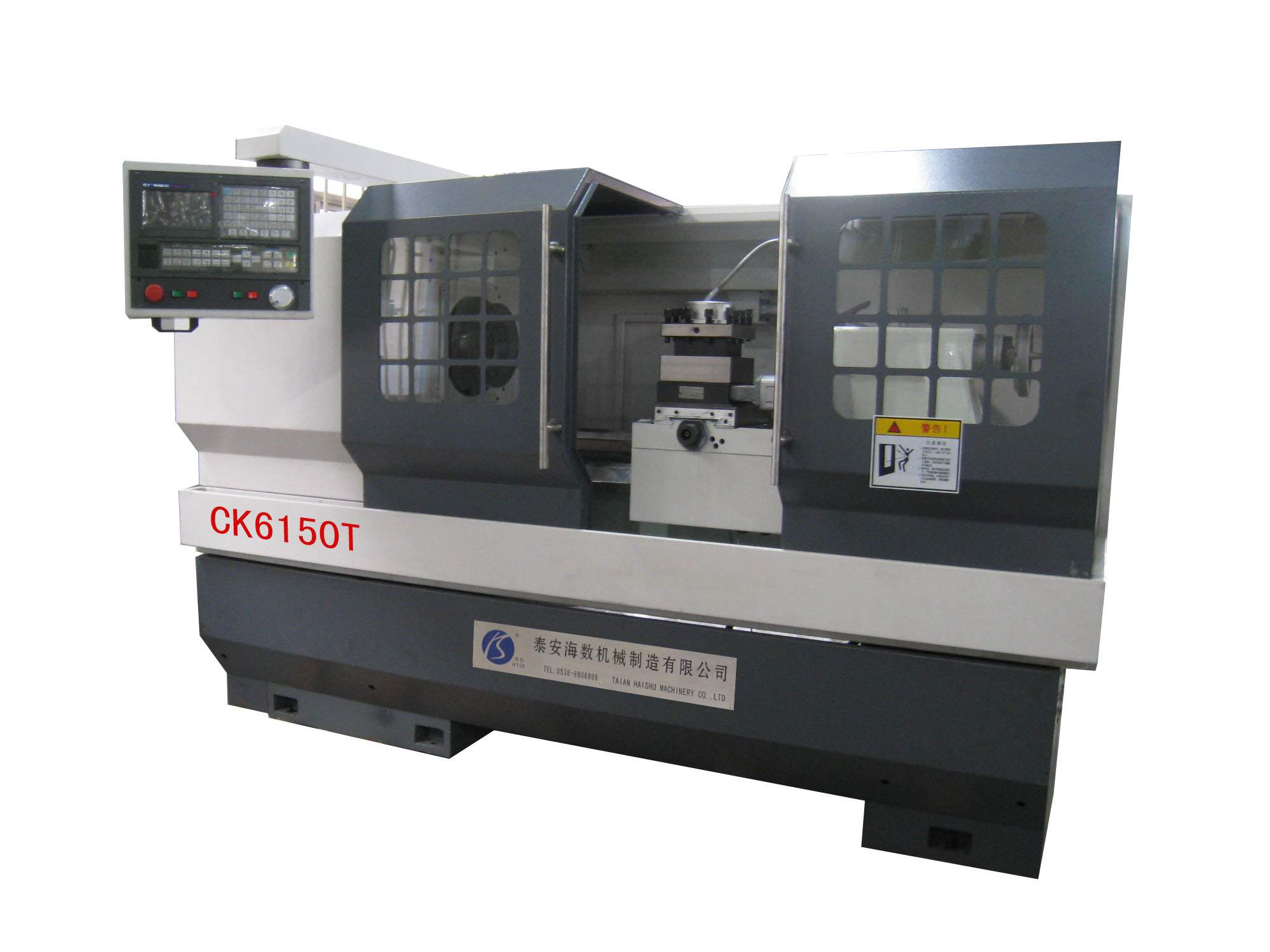
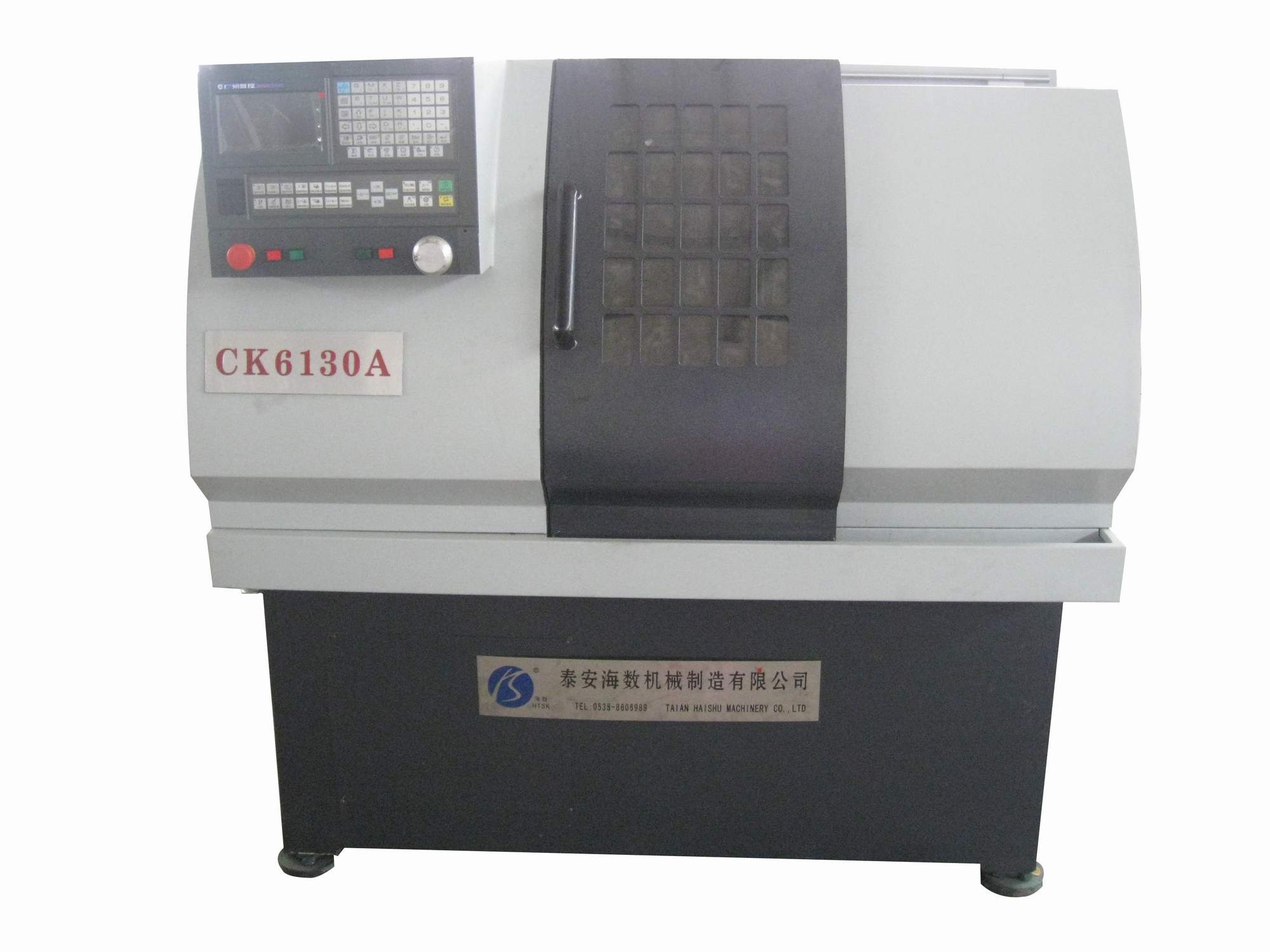
Quick Answer: Do not simply "turn on the power and start cutting" when starting a new CNC lathe. The correct sequence is: first inspect the appearance and documents, then confirm installation level, power supply, and grounding, then check air source, hydraulic, and lubrication systems, then complete system parameter and safety function confirmation, and finally gradually release machining through dry running, reference point return, and trial cutting acceptance. The following nine precautions can serve as an on-site checklist for new machine startup and commissioning.
Reminder: New machine startup should be jointly completed by trained operators and the equipment manufacturer's commissioning personnel. When involving the electrical cabinet, parameter modification, and precision testing, the equipment's accompanying Operation Manual and Maintenance Manual must be followed. Never plug or unplug wires while energized or arbitrarily change key parameters.
Precaution 1Unpacking Inspection and Document Check: First Confirm "Whether the Right Things Arrived"
After the new machine arrives at the factory, do not rush to install and power it on. Complete the unpacking inspection first.
Key Checks
- Verify that the machine model, specifications, and configuration list match the contract;
- Check the appearance for transport damage, rust, deformation, and whether the guards are intact;
- Check accompanying documents: operation manual, maintenance manual, electrical schematic, parameter list, certificate of conformity, and packing list;
- Check whether accessories, turret, chuck, tailstock, tools, and spare parts are complete;
- Record abnormalities and take photos, and communicate with the manufacturer promptly.
Why It Matters: If transport damage and missing items are not confirmed at the unpacking stage, responsibility will be difficult to determine later, and startup safety may be affected.
Precaution 2Installation Environment and Foundation Level: The Machine Must "Stand Firm" for Stable Machining
CNC lathes have clear requirements for the installation foundation and levelness. Proper machine positioning is the first step toward precision stability.
Key Checks
- Confirm that the installation location is away from vibration sources, heat sources, and strong electromagnetic interference sources;
- Check whether the bearing capacity of the foundation or leveling pads meets the machine weight requirements;
- Use a level gauge to adjust the machine level and tighten the anchor bolts according to the manufacturer's requirements;
- Check the bed, guideways, and guards for deformation and interference caused by transport or installation;
- Reserve sufficient space for operation, maintenance, and chip evacuation.
Why It Matters: Poor machine levelness can lead to uneven guideway wear, taper in machining, or unstable dimensions, which subsequent parameter compensation cannot completely solve.
Precaution 3Power Supply and Grounding Check: The First Line of Electrical Safety
Before powering on a new machine, confirm that the power supply conditions and grounding system meet requirements.
Key Checks
- Confirm that the input voltage, frequency, and phase sequence match the machine nameplate requirements;
- Check whether the three-phase power phase sequence is correct to avoid reverse rotation of the spindle or turret motor;
- Check whether the grounding resistance meets requirements and whether the grounding wire is reliably connected;
- Check whether the specifications of circuit breakers, fuses, contactors, and thermal relays match;
- Check the electrical cabinet for loose wiring, foreign objects, moisture, or condensation.
Why It Matters: Incorrect phase sequence, poor grounding, or abnormal voltage may cause drive alarms, motor reverse rotation, or even safety accidents.
Precaution 4Air Source, Hydraulic, and Lubrication Check: Auxiliary Systems Must Be "Ready" First
The normal operation of the spindle, chuck, turret, and guideways depends on the air source, hydraulic, and lubrication systems.
Key Checks
- Check whether the air source pressure meets requirements, whether the air pipes leak, and whether the filter is drained;
- Check whether the hydraulic station oil level, oil quality, and pressure are normal and whether there is leakage;
- Check whether spindle lubrication, guideway lubrication, and ball screw lubrication are supplying oil normally;
- Check the coolant level and concentration, and whether the coolant pump rotation direction is correct;
- Check whether the chip conveyor and centralized lubrication device work normally.
Why It Matters: Insufficient lubrication or abnormal hydraulic pressure can cause guideway scratching, spindle bearing damage, or abnormal turret action in a short time.
Precaution 5System Parameters and Battery Check: Do Not Let the "Memory" Be Lost
Before starting a new machine, confirm the system parameters, tool compensation data, and system battery status.
Key Checks
- Confirm that system parameters, PLC parameters, and servo parameters have been commissioned and backed up by the manufacturer;
- Check whether the system battery voltage is normal to avoid parameter loss after power failure;
- Record key parameters and initial tool compensation values and make backups;
- Check basic settings such as system language, units, date, and time;
- Confirm that there are no unhandled abnormal messages in the alarm record.
Why It Matters: System battery failure or parameter mis-modification may prevent the machine from returning to the reference point, cause tool compensation confusion, or even prevent normal startup.
Precaution 6Spindle and Turret Dry Run: "Run Empty" Before Applying Load
For the first operation of a new machine, dry running and action tests should be performed to confirm that the mechanical and electrical systems cooperate normally.
Key Checks
- Dry-run the spindle step by step from low to high speed, listening for abnormal noise and observing for abnormal vibration;
- Check whether spindle forward/reverse rotation, stop, and orientation are normal;
- Change tools station by station on the turret and check whether the tool change action is smooth and locking is reliable;
- Check whether the chuck clamping/unclamping action is normal and whether the clamping signal is in place;
- Check whether auxiliary actions such as tailstock, cooling, and chip evacuation are normal.
Why It Matters: Dry running can detect assembly, lubrication, phase sequence, and signal problems in advance, avoiding secondary damage after loading.
Precaution 7Reference Point Return and Soft Limit Confirmation: Establish the Correct "Coordinate Datum"
After starting a new machine, the reference point must be returned according to the manufacturer's requirements, and the soft limit settings must be confirmed.
Key Checks
- Return each axis to the reference point according to the operation manual and confirm that the reference point position is correct;
- Check for abnormal noise, alarms, or over-travel during reference point return;
- Confirm that the soft limit parameters match the actual machine travel;
- Check whether basic operations such as emergency stop, over-travel release, and manual movement are effective;
- Confirm that there is no interference between the turret, tailstock, and other components and the axes.
Why It Matters: An inaccurate reference point or incorrect soft limit settings may cause over-travel, collision, or overall dimensional offset during program execution.
Precaution 8Program, Safety Function, and Alarm Test: Verify the "Protection" First
Before formal machining, test the safety functions and alarm system.
Key Checks
- Check whether the emergency stop button, safety door switch, and chuck clamping interlock are effective;
- Test whether over-travel alarms, drive alarms, and spindle alarms display normally;
- Dry-run a simple program to verify program call, tool compensation call, and coordinate display;
- Check whether program transfer, USB/network interface, and storage are normal;
- Confirm that the buttons, indicator lights, and override switches on the operation panel function normally.
Why It Matters: If safety functions fail, operators may mistakenly believe the equipment is in a protected state. Once interference or over-travel occurs, the consequences will be more serious.
Precaution 9Trial Cutting Acceptance and Personnel Handover: Verify Machine Status with Workpieces
Whether the new machine is ultimately usable must be confirmed through trial cutting and precision acceptance.
Key Checks
- Use a trial workpiece to perform external turning, facing, threading, or arc machining;
- Measure dimensional accuracy, roundness, cylindricity, and surface roughness to see whether they meet requirements;
- Check whether dimensions are stable during batch trial cutting and fine-tune tool compensation if necessary;
- Train operators on safe operation, tool setting, tool compensation, and alarm handling;
- Complete equipment acceptance records and specify warranty, after-sales service, and technical support contact information.
Why It Matters: Trial cutting is a comprehensive means of verifying installation, parameters, tool compensation, and mechanical status. It is also the best time for operators to become familiar with the new machine.
Quick-Reference Table of Nine Precautions for New Machine Startup
| No. |
Precaution |
Key Check Content |
Key Purpose |
| 1 |
Unpacking inspection and document check |
Model and configuration, appearance damage, accompanying documents |
Confirm equipment completeness and clear responsibility |
| 2 |
Installation environment and foundation level |
Foundation, leveling pads, level gauge, anchor bolts |
Ensure a stable precision foundation |
| 3 |
Power supply and grounding check |
Voltage, phase sequence, grounding, electrical cabinet |
Ensure electrical safety |
| 4 |
Air source, hydraulic, and lubrication check |
Air pressure, oil level, oil pressure, lubrication supply |
Protect key components |
| 5 |
System parameters and battery check |
Parameter backup, battery voltage, alarm records |
Prevent parameter loss |
| 6 |
Spindle and turret dry run |
Step-by-step speed increase, tool change, chuck action |
Detect assembly problems in advance |
| 7 |
Reference point return and soft limit confirmation |
Reference return, soft limit, over-travel release |
Establish correct coordinate datum |
| 8 |
Program and safety function test |
Emergency stop, safety door, interlock, alarm |
Verify protection functions are effective |
| 9 |
Trial cutting acceptance and personnel handover |
Dimensional accuracy, roughness, operation training |
Confirm equipment is usable and personnel can operate it |
Frequently Asked Questions (FAQ)
Q1: What should be done first before starting a new CNC lathe?
Do not rush to install and power on the new machine after it arrives at the factory. First complete unpacking inspection and document checking: verify that the machine model, specifications, and configuration list match the contract; check the appearance for transport damage, rust, or deformation; check that the operation manual, maintenance manual, electrical schematic, parameter list, certificate of conformity, packing list, accessories, and spare parts are complete; and take photos to record any abnormalities.
Q2: Why should power phase sequence and grounding be checked before starting a new CNC lathe?
Incorrect phase sequence may cause the spindle or turret motor to rotate in reverse. Poor grounding or abnormal voltage may cause drive alarms, motor abnormalities, and even safety accidents. Therefore, before power-on, confirm that the input voltage, frequency, and phase sequence match the machine nameplate requirements, that the grounding resistance meets requirements, and that there are no loose wires, foreign objects, moisture, or condensation inside the electrical cabinet.
Q3: Why should a new CNC lathe be dry-run first?
Dry running can detect assembly, lubrication, phase sequence, and signal problems in advance without load, avoiding secondary damage after loading. The spindle should be dry-run step by step from low to high speed, listening for abnormal noise and observing for abnormal vibration. The turret should be tested station by station for tool change, the chuck for clamping and unclamping, and the tailstock, cooling, and chip conveyor for normal auxiliary actions.
Q4: What should be noted when returning a new CNC lathe to the reference point?
Each axis must be returned to the reference point according to the operation manual. Confirm that the reference point position is correct, check for abnormal noise, alarms, or over-travel during the process, confirm that the soft limit parameters match the actual machine travel, and check that basic operations such as emergency stop, over-travel release, and manual movement are effective. An inaccurate reference point or incorrect soft limit settings may cause over-travel, collision, or overall dimensional offset during program execution.
Q5: What are the main checks in trial cutting acceptance for a new CNC lathe?
Use a trial workpiece to perform external turning, facing, threading, or arc machining. Measure dimensional accuracy, roundness, cylindricity, and surface roughness to see whether they meet requirements. Check whether dimensions are stable during batch trial cutting and fine-tune tool compensation if necessary. At the same time, train operators on safe operation, tool setting, tool compensation, and alarm handling, and complete equipment acceptance records specifying warranty, after-sales service, and technical support contact information.
Summary
The core principles for first startup of a new CNC lathe are: "inspect first, then power on; dry run first, then apply load; verify safety first, then perform trial cutting acceptance." The nine precautions cover the entire process from unpacking to trial cutting. They can avoid equipment damage caused by transport, installation, and electrical problems, and also help operators quickly become familiar with the new machine's status.
Haishu Machinery, as a professional CNC lathe manufacturer, can provide customers with new machine installation and commissioning, operation training, and technical support services. If you encounter problems during new machine startup or equipment acceptance, welcome to contact the Haishu Machinery technical team.